
Image source: Genemedics
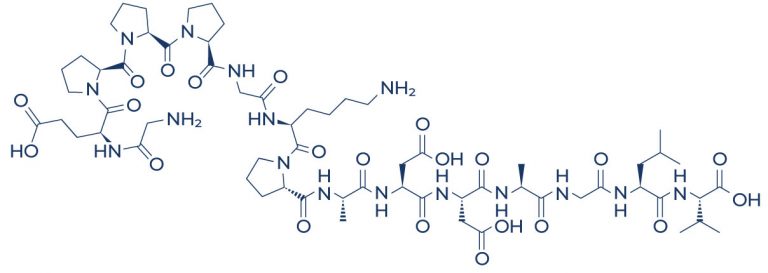
BPC-157 (Body Protection Compound 157), is a peptide chain that consists of 15 amino acids. Since such a sequence does not exist in nature, the compound is considered synthetic. However, it is based on a protective compound that is present in the human stomach (a gastric peptide). This gastric peptide is something that we all make, which can promote healing of tissues.
Several studies and lab research experiments conducted on rodents have shown that BPC-157 can have a variety of therapeutic and physical effects. BPC-157 works by triggering the formation of new blood vessels, a process that is called angiogenesis. Angiogenesis is an integral part of the wound-healing process and the organization of the blood vessel network. The formation of new blood vessels promotes healing and induces faster regeneration of cells. It also works by blocking or preventing the growth-inhibiting effects of a molecule named 4-hydroxynonenal. BPC-157 will stimulate the tendon cells to make even more receptors for the growth molecules, which will, in turn, induce them to grow and move during injury repair. As an example, Dr. Andrew Huberman had two injections of BPC-157 and fixed his L5 compression issues in his back.
Benefits BPC-157 Can Have on Your Body
- Lower intestinal damage like fistulas and inflammation
- Cure and heal stomach ulcers
- Improve wound healing
- In mice with burn injuries, BPC-157 was able to treat skin burns by significantly improving collagen fiber formation and decreasing the number of inflammatory cells. Study 1, 2 , 3 and 4.
- In wounded rats, BPC-157 administration enhanced the formation of granulation tissues (new tissues that form on an ulcer or the healing surface of a wound) and new blood vessels. Study 5 and 6.
- A study found that BPC-157 was able to treat skin burns by enhancing wound healing in a model of alkali burn-induced skin injury.
- In rats with intestinal lesions, BPC-157 administration significantly reduced damage to blood vessels and occlusion. Study 8 and 9.
- In rats with celecoxib-induced gastrointestinal, liver, and brain lesions, BPC-157 reversed the damaging effect of the drug.
- In broiler chicks with severe damage to the tissues of the heart, liver, and spleen, BPC-157 administration at 10 micrograms/kg reduced organ damage.
- In honeybees with severe damage to midgut wall layers, supplementation with sugar syrup containing BPC-157 decreased damage to the outer muscular coat.
- Increase cellular regeneration
- Boost bone and joint healing
- Heal organ damage
- Reduce muscle wastage
- Promote growth and muscular development through angiogenesis
- Influence neurotransmitter activities and help cure mental health issues
- In rats with brain damage similar to Parkinson’s disease (PD), administration of BPC-157 appears to mitigate some of the damage.
- In rodents with multiple sclerosis (MS), a chronic disease affecting the brain and spinal cord, oral BPC-157 administration decreased brain damage and clinical abnormalities. Study 1 and 2.
- In rats with traumatic brain injury, BPC-157 administration is associated with a reduction of unconsciousness and a lower prevalence of deaths.
- In rats, BPC-157 counteracted ischemic/reperfusion injuries (tissue damage caused when blood supply returns after a period of insufficient blood circulation in the brain), resulting in improved memory, orientation, and motor capabilities.
- Lower blood pressure
- Reduce side-effects of high potassium levels
- In rats with hyperkalemia (potassium overdose), BPC-157 therapy protects against heart failure by completely restoring the normal heart rhythm and electrical activities of the heart. Study 1, 2 and 3.
- In rats with hypokalemia (potassium deficiency), BPC-157 therapy protects against heart failure by counteracting abnormal heart rhythm. Study 1 and 2.
BPC-157 Can Enhance Healing in Most Parts of the Body
- Gut
- Cardiovascular System
- Brain (including TBI)
- Spinal Cord
- Muscle
- Bones
- Ligaments
- Tendons
- Achilles
See paper #1 and paper #2 for more info.
It seems particular effective in repairing the gut. It has been found to be very useful for the following conditions:
- IBS
- IBD
- Crohn’s
- Stomach Ulcers
- Diverticulitis
- Ulcerative Colitis
How Does It Work?
BPC-157 enhances angiogenesis (new blood vessel formation). BPC does this via enhancing VEGF signaling (upregulates VEGFR2). This boosts blood flow to damaged parts of the body.
Furthermore, a study from 2014 found that BPC also:
- Boosts growth hormone (GH) signaling by upregulating GH receptors.
- Increases fibroblast activity and thus the production of collagen (crucial for repair).
- Helps replace Type III collagen fibers with the stronger & more durable Type I collagen fibers.
Another study from 2014 found that BPC:
- Improves blood flow & blood pressure via enhancing endothelial nitric oxide.
- Exerts systemic antioxidant & anti-inflammatory effects. These effects are seen even in hard-to-reach tissue and will rescue cells from death.
BPC-157 also modulates EGR-1 expression. A gene that is not only heavily involved in wound healing, but as seen from this review article from 2017, it also affects nearly every factor in neuroplasticity
- Neurotransmitter Transport/Release
- Synaptic Architecture
- Protein Metabolism
BPC-157 increases neuroplasticity and can help the brain return to homeostasis. As an example, BPC-157 has been shown to reduce the intoxicating and euphoric effects of drugs such as alcohol (in mice), amphetamine and opioids (in rats). Moreover, it also seem to have a modulatory effect on the dopamine system, and could be used in chronic amphetamine disturbances as it reduces the withdrawal and cravings after stopping them.
BPC-157’s homeostatic effect is also seen in animal studies, where it:
- Improves traumatic brain injury (TBI)
- Improves spinal cord injury
- Counteract serotonin syndrome (ref. this study on rats from 2005)
- Reduce depression & anxiety (ref. this study on rats from 2000)
However, research in this regard is still in the early stages.
Tolerability
BPC-157 is tolerated extremely well. Nearly all animal and human studies report virtually no side effects. BPC-157 has not been found to have a negative effect on fertility or testosterone production. In fact, some studies have shown that it can actually increase testosterone levels. So far, researchers have not even been able to find a toxic/lethal dose.
One hypothetical concern is that BPC-157 will worsen the spread of existing cancers (via VEGF/angiogenesis). However, one study has found evidence to the contrary, as BPC-157 inhibits cell growth and VEGF signalling via the MAPK kinase pathway in the human melanoma cell line. This is a prime example of BPC-157 being a modulatory/homeostatic peptide.
Be aware that BPC-157 will lessen the effects of most drugs. This applies in particular to Adderall. Use BPC with caution if you are prone to anhedonia, or if you are heavily dependent on amphetamine stimulants.
Words of Warning
Keep in mind that BPC-157 is still under research and study. Experiments with animals are underway, so the multiple mechanisms of BPC-157 requires further studying. Human trials and more research are required before we can positively conclude the full range of effects of BPC-157.
The studies listed in this article are on animals (mostly mice and rats), and as always, keep in mind the golden standards of scientific studies, when evaluating the quality of the studies for yourself.
In General (not in particular for BPC-157), Common Side-Effects of Peptides Include
- Fatigue and tiredness
- Dizziness
- Nausea and vomiting
- Possibility of liver and kidney toxicity
- Hot flashes (feeling hot and cold)
- Changes in blood pressure
- Possibility of heart complications (stroke, abnormal heart rhythms)
- Cancer
BPC-157 is included on the World Anti-Doping Agency’s (WADA) Prohibited List under the S0 Non-Approved Substances category. This classification means it is prohibited at all times, both in and out of competition, because it is not approved for human clinical use and its effects and safety in humans are not fully established.
Dosing
The dosage for BPC-157 is not determined at this stage, as it has not yet been subjected to full-blown human trials.
The most common way to administer BPC-157 is through the form of injections.
For intramuscular injection of BPC-157, the dose is typically 16 mcg per dose, twice a day. The injections can be given subcutaneously (under the skin) or intramuscularly (into the muscle).
Unlike most peptides, BPC-157 can be taken orally and will remain stable in gastric juice for hours. For oral administration of BPC-157, the dose is typically 500 mcg BPC-157 Acetate per dose, twice a day, until your ailments are healed (but for a maximum of 8 weeks). The capsules can be taken with or without food. Oral ingestion is best when you intend to heal ailments in the gut, but it will also work systemically.
It is incredibly important to remember to consult a doctor or a licensed medical professional before you decide on dosage and begin using BPC-157. If you take more than what is required, you may experience intense side effects (such as headache, nausea and fatigue).
There has been anecdotal reports of people who only used BPC-157 to fully heal their “leaky gut”. Already 1 week in at 1000 mcg/day, benefits has been noticed. Less bloating, fatigue, and brain fog. Considerable improvements was observed after 4 weeks, and after 6 weeks healing was deemed as being 100%.

If you are using BPC-157 to heal a severe injury related to muscle, tendons, bones, etc. You may want to inject subcutaneously closer to the site of injury (work with a practitioner) 300-500 mcg/day injected subcutaneously until healed, for an individual who weighs 60 kg (132 lbs). Females may require even lower doses. Limit use to 4 weeks.
If you are consuming only for pain relief purposes, the dosage for BPC-157 would be around the 250 mcg mark.
If you are not sure where to start, one might want to consider SwissChems. They are one of the most trusted and reputed websites out there, and there are innumerable reviews and articles that praise them for their products, delivery, processing, and more.
The injectable version of BPC-157 can be acquired here for research purposes. It is made in USA and 3rd party lab-tested for quality.
For injuries outside of the gut, you may want to consider pairing BPC-157 with TB-500. TB-500 works synergistically with BPC-157 (via the actin and VEGF pathways) 2 mg, 2x/week injected subcutaneously for 4 weeks. The injectable version of TB-500 can be acquired here for research purposes.
Keep in Mind
- For the treatment of acute injuries, a higher dose may be necessary.
- For the treatment of chronic conditions, a lower dose may be sufficient.
- The dosage may need to be adjusted depending on the individual’s response.
📚 Sources and References
- Cell death and diseases related to oxidative stress:4-hydroxynonenal (HNE) in the balance (2013)
- BPC157’s Effect on Healing (1997)
- Pentadecapeptide BPC 157 and the central nervous system (2022)
- Stable gastric pentadecapeptide BPC 157: novel therapy in gastrointestinal tract (2011)
- Therapeutic potential of pro-angiogenic BPC157 is associated with VEGFR2 activation and up-regulation (2017)
- Pentadecapeptide BPC 157 enhances the growth hormone receptor expression in tendon fibroblasts (2014)
- Stable gastric pentadecapeptide BPC 157-NO-system relation (2014)
- The Role of Early Growth Response 1 (EGR1) in Brain Plasticity and Neuropsychiatric Disorders (2017)
- The influence of gastric pentadecapeptide BPC 157 on acute and chronic ethanol administration in mice (2004)
- Pentadecapeptide BPC 157 attenuates chronic amphetamine-induced behavior disturbances (2002)
- The antidepressant effect of an antiulcer pentadecapeptide BPC 157 in Porsolt’s test and chronic unpredictable stress in rats. A comparison with antidepressants (2000)
- Gastric pentadecapeptide BPC 157 effective against serotonin syndrome in rats (2005)
- Preclinical safety evaluation of body protective compound-157, a potential drug for treating various wounds (2020)
- BPC 157 inhibits cell growth and VEGF signalling via the MAPK kinase pathway in the human melanoma cell line (2004)
Leave a Reply