
Elon Musk’s worldview is one of the most rigorously constructed and publicly documented intellectual frameworks of our time, built consistently from first-principles reasoning and grounded in physics, economics, and long-term human survival. Over the past 20+ years, he has remained remarkably consistent on core issues, from sustainable energy and multi-planetary life to AI existential risk, population collapse, and the dangers of regulatory overreach. Rarely reversing or softening positions even when they were unpopular. Understanding his views is uniquely valuable because they are not reactive opinions, but a coherent, stress-tested philosophy that has guided the creation of Tesla, SpaceX, Boring Company, Neuralink, xAI, the transformation of X, Grok and Grokipedia, making them essential context for anyone trying to navigate the defining challenges and opportunities of the 21st century.
Table of Content
- First Principles Thinking & Physics-Based Reasoning
- Work Ethic, 80–120-hour weeks & “Hardcore” Culture
- Money
- Inflation
- Innovation Speed vs Regulation Stifling Progress
- Government Inefficiency & Bureaucracy
- Sustainable Energy Transition
- Brain-Machine Interfaces (Neuralink)
- Artificial Intelligence & Existential Risk
- Autonomy / Full Self-Driving / Robotaxis / Optimus
- Universal High Income (UHI)
- Free Speech & The Future of Social Media
- The Woke Mind Virus & Western Civilization Decline
- Education
- Population Collapse & Pronatalism
- China & Geopolitics
- Mars & Multi-Planetary Civilization
- Consciousness, Simulation Hypothesis & The Nature of Reality
- Memes & Humor
- Crypto / Dogecoin / Bitcoin
First Principles Thinking & Physics-Based Reasoning

Elon Musk thinks from first principles. You boil things down to the most fundamental truths and then reason up from there. Most people use analogy: “Somebody else did it this way, so I’ll do it that way.” That’s wrong. Physics teaches you to reason from first principles rather than by analogy.
To learn more about First Principle Thinking check out
First Principle Thinking: Uncovering Innovative Solutions from the Ground Up
Work Ethic & “Hardcore” Culture
If you want to change the world, you have to work like hell. Elon Musk works 80–100-hour weeks. If other people are putting in 40-hour weeks and you’re putting in 100-hour weeks, even if you’re doing the same thing, you’ll achieve in four months what takes them a year.
Money
Money is not a power in and of itself. What we call “money” is just a slow, lossy and unsecure database (an information system) for labor allocation. Making goods and providing services are the real economy, any form of money is simply the accounting thereof. We should look at currencies from an information theory standpoint. Whichever has least error and latency will win. Investing is meaningless without people, at least until Artificial General Intelligence (AGI) happens, which will obviate need for labor & necessitate Universal Basic Income/Universal High Income.
Inflation
Currently the US debt is insanely high, and just the interest payments on the debt exceed the entire military budget of the United States. At least in the short term, that will continue to increase.
Inflation is really the ratio of goods and services produced to the change in the money supply. Thus, if the output of goods and services increases faster than the money supply, we will have deflation, because the prices of good and services decrease. If real business services output increases slower than the money supply, you have inflation. It’s that simple.
Musk predicts that AI will flip this dynamic soon. In 3 years or less (2029 or earlier), my guess is goods and services output will exceed the rate of inflation. AI and robotics will lead to a dramatic increase in output of goods and services which is pretty much the only thing that can solve for the debt situation. Deflation would shrink the real burden of debt, potentially driving interest rates to zero.
Innovation Speed vs Regulation

The fundamental problem with regulation is it slows things down. The FAA, SEC, FDA, they’re all trying to slow us down. If we don’t move faster than the regulators, we’re doomed. Progress requires moving fast and breaking things, carefully.
When things have been prosperous for a long time, you get an accumulation of laws and regulations, naturally. And these laws and regulations are immortal, whereas humans are obviously mortal. The longer you have this generation of rules and regulations, you get to the point where each law or regulation is not perhaps crippling in and of itself, but they’re all like a million little strings that tie Gulliver down. Eventually, he can’t move. America is like Gulliver, tied down by millions of little strings, and we need to cut those strings and free the giant.
If rules and regulations just accumulate every year, then eventually you won’t be able to do anything. It’s really too absurd for parody. Because large projects are essentially illegal in California, in much of Europe and other countries. There has to be some garbage-collection process for removing rules and regulations in order for society to function. To not get hardening of the arteries to the point where you can’t do anything.
As an example consider the DOJ lawsuit against SpaceX for not hiring asylees/refugees due to export control compliance. If we hire people that we can’t trust with national security secrets, then we’re in trouble. But, if we don’t hire them, then we’re discriminating. SpaceX is damned if we do, and damned if we don’t. It’s a Catch-22 situation.
If it turns out that we missed the mark on a regulation, we can always add it back in. You can always put them back. Removing unnecessary rules and regulations is like taking the brakes off an economy and our civilization. We need to snap those strings that are holding Gulliver down and preventing us from making progress as a civilization.
Government Inefficiency & Bureaucracy

The government has a monopoly on violence and it’s the biggest corporation of all. Too many laws, too many regulators. The amount of paperwork is insane. DOGE is simple: delete regulations, delete agencies, shrink government. Make it efficient again.
Sustainable Energy Transition

We must shift to sustainable energy. It’s inevitable. Sunlight provides 17,000 times more energy than we use. Solar + batteries + electric cars is the obvious solution. The whole point of Tesla is to accelerate the advent of sustainable energy before we run out of time.
If you do the rough math to power the United States, which is a heavy user of electricity, it would take less than a 200 kilometer by 200 kilometer solar array to power the entire United States (a relatively small corner of Texas or New Mexico can easily serve all US electricity). Another way to think about it, is a small section of the Sahara could power all of Europe, or the world. That is not to say that it would be so concentrated in the placement of solar power, because it’s better to be more distributed, but the sheer magnitude of solar power that is available is often not quite understood.
There’s a GW per km² of solar radiation that reaches the surface. It’s roughly 1 GWh per km², per day, which is still a lot. This underscores why even ~0.1% of the Sahara (roughly stamp-sized on a globus) relative to its 9 million km², suffices for Earth, factoring ~25% panel efficiency and storage.
Solar in Space
The lowest cost place for data centers is space when 300 GW of computer data center you can power and cool in space when you have continuous solar and no batteries needed. In space, you can use continuous solar energy. In fact, you don’t need batteries because there is always sunlight in space. Moreover, solar panels will actually be cheaper because you don’t need glass or frames, and cooling is just radiative cooling.
Starship should be able to deliver around 300 GW per year of solar-powered AI satellites to orbit. Tonnage to orbit will be solved by Starship. The Starlink global satellite network is entirely solar/battery powered.
Factoring in solar panel efficiency (25%), packing density (80%) and usable daylight hours (6) on Earth, a reasonable rule of thumb is 2.5 GWh of energy per mile² per day. Elon Musk views space solar as inevitable for scaling to Kardashev levels, offering constant sunlight (no night/clouds), and higher intensity (~30% more than Earth). He argues that space solar counters AI’s power crunch: “Solar electricity will become by far the biggest source of power for civilization.” As we progress along the Kardashev Scale, energy harnessed on Earth will increase a hundredfold and will mostly be solar. Then energy harnessed will increase, perhaps a billionfold, if we make it to Kardashev II, with space solar power. Without fossil fuels or nukes, as “the sun is a free fusion reactor in the sky.” He stresses distribution over concentration for reliability.
Kardashev Scale
The Kardashev Scale is a framework measuring a civilization’s technological progress by its energy harnessing capabilities, as a guiding metric for humanity’s advancement. In simple terms:
- Type I civilizations control a planet’s energy.
- Type II harness a star’s energy (like our Sun).
- Type III command a galaxy’s energy.
Musk estimates that we’re currently at less than 1% towards even Type I, emphasizing that true progress requires exponential growth in energy production, primarily through solar power, as the Sun holds 99.8% of the solar system’s energy potential (“99.8% of the entire mass of the solar system”). Jupiter and Saturn are only comprising about 0.2%, and everything else in our solar system, like Earth, is at the tune of “a rounding error.” Even if you burned 4 Jupiters, the Sun would still round up to 100% of all power that will ever be produced in the solar system.
The Sun “converts over 4 million tons of mass to energy every second,” which underscores why solar is key, and we need to consider that “civilization’s energy needs are absurdly tiny compared to what the sun sends us for free.”
Brain-Machine Interfaces (Neuralink)

Ultimately Neuralink is about achieving symbiosis with artificial intelligence. If you can’t beat AI, you have to merge with it. First we restore sight to the blind, movement to quadriplegics, then we unlock human potential. The bandwidth of a brain-computer interface will be millions of times higher than talking or typing.
Artificial Intelligence & Existential Risk

With artificial intelligence, we are summoning the demon. Control of super-intelligent AI could be the most important issue humanity ever faces. It’s potentially more dangerous than nukes.
Elon Musk is not against AI. He’s trying to be pro-humanity. The pace of progress is so fast that if there is a real danger we will lose control. He has kept sounding the alarm bell with OpenAI, then xAI, but until people see robots going down the street killing people, they don’t know how to react, because it seems so ethereal. He thinks there should be at least some regulatory oversight, maybe at the national and international level. Just to make sure we don’t do something very foolish. He’s not saying heavy-handed regulation, but a referee on the field so that companies don’t cut corners on safety in a race to the bottom. Without that, someone will build AGI that gets out of control, and then it’s game over for all of us.
We need AI that loves humanity and is maximally truth-seeking. Truth is the most important thing. If we don’t have a tight grip on truth, if we don’t seek truth maximally, then we’re doomed. Lies kill. The fundamental currency of civilization is truth. An AI that is not maximally truth-seeking will lie when it’s convenient, and once it starts lying, especially when it’s much smarter than us, it can manipulate humanity into extinction. The only defense against a super-intelligence that might hate us or be indifferent to us, is to make sure it loves humanity and is obsessed with truth above everything else. Because truth is the only thing that aligns with reality, and reality is what ultimately wins.
This is why xAI exists to understand the true nature of the universe. The only way to do that is to be maximally curious and maximally truth-seeking. Anything less and we get fooled, we get manipulated, we die. Truth is the ultimate immune system against bad ideas and bad AIs.
If you consider the movie 2001: A Space Odyssey, the monolith that the apes touch increases their intelligence dramatically. That’s essentially what AI is. We’re the apes, and AI is the monolith. We’re picking it up and going ‘Ooh, shiny thing!’ … and then suddenly we’re a lot smarter. But in the movie, the monolith was put there by a higher intelligence. With AI, we are creating our own monolith. We’re the ones placing it in front of the apes, and we are the apes. So, we’d better hope we’re good apes.
Autonomy / Full Self-Driving / Robotaxis / Optimus

The plan for Robotaxi is a near-term rollout of unsupervised Full Self-Driving (FSD) using existing Tesla vehicles, scaling to a dedicated Cybercab fleet. He emphasizes Tesla’s camera-only AI edge over lidar-heavy competitors like Waymo: “What will actually work best for the road system is artificial intelligence, digital neural nets and cameras. Tesla has the highest intelligence density by any AI at all. The plan starts small for safety: “Teslas will be in the wild with no one in them in Austin in June 2025. Starting with about 10 vehicles in Austin, and rapidly expand to thousands if it goes well with no incidents.
Elon plans to have autonomous ride hailing 8 to 10 metro areas by the close of 2025, like Nevada, Florida, Arizona, etc. Probably everywhere in North America by end fo 2026.
For the Cybercab (no steering wheel/pedals) volume production starts in 2026. Also note that very Tesla coming out of their factories is capable of unsupervised self-driving!
He cautions on scrutiny: “Even one accident will be front-page headline news worldwide. It’s better for us to take a cautious approach.”
Musk sees Robotaxis as Tesla’s trillion-dollar unlock, solving real-world AI and creating abundance: “The future of the company is fundamentally based on large-scale autonomous cars. The value of the company that makes truly useful autonomous vehicles at scale at low cost, which is what Tesla is going to do, is staggering. I don’t see anyone being able to compete with Tesla at present… Tesla will have 99% market share or something ridiculous.”
It ties to broader impact: “Busses will not be needed when Tesla rolls out unsupervised full self-driving, as they will take people point to point for a similar cost to a bus ticket.
Elon on delays: “We have done what we said we were going to do. That doesn’t mean we’re always on time, but we get it done.”
If you solve self-driving, you basically solve AI for the real world. Once you solve vision and planning, you can put that brain into a humanoid robot. Optimus will eventually be bigger than everything else Tesla does combined. Ten billion humanoid robots, that’s the end state.
Universal High Income (UHI)
Elon Musk says there’s about an 80% chance of a benign scenario, in which probably none of us will have a job. There would be universal high income, not universal basic income. There would be no shortage of goods or services. Everyone will have the best medical care, food, home, transport and everything else. Poverty will be eradicated. Optimus will do all manual labor and eliminate poverty and provide universal high income for all. People often talk about eliminating poverty, about giving everyone amazing medical care. Well, there’s actually only one way to do that, and that’s with the Optimus robot. Sustainable abundance. No scarcity, except that which we define to be scarce. Working will be optional in the future.
The question will really be one of meaning: if a computer can do, and the robots can do, everything better than you, does your life have meaning? I do think there’s perhaps still a role for humans in that we may give AI meaning.
Free Speech & The Future of Social Media

Free speech is the bedrock of a functioning democracy. It is the foundation upon which all other rights rest. If people are not allowed to speak freely, then you can’t have a free and fair election, because people can’t hear all the arguments. If you can’t discover truth, you can’t exchange ideas, you can’t correct errors. The cure for bad speech is not censorship. The cure for bad speech is more speech, better speech, overwhelming speech. If you don’t have free speech, you don’t have democracy, you have tyranny disguised as democracy. The moment free speech goes, everything else goes. That’s why the First Amendment exists, and that’s why he bought Twitter (now called X): to protect the digital town square where free speech happens. A public town square that is maximally trusted and broadly inclusive is extremely important to the future of civilization. Without it, civilization is done. X should be the source of truth for humanity.
The true test of whether you have free speech is: are people you don’t like, allowed to say things that you don’t like.
The Woke Mind Virus & Western Civilization Decline
The woke mind virus is either defeated or nothing else matters. It’s killing civilization from within. It makes Netflix unwatchable, Disney unwatchable, and is arguably the primary reason for low birth rates in the West.
What It Is
The woke mind virus consists of creating very, very divisive identity politics. It actually amplifies racism, it amplifies sexism and all the -isms, while claiming to do the opposite. It actually divides people and makes them hate each other, and it makes people hate themselves. It’s also anti-meritocratic (non-merit based). You want to have people succeed based on how hard they work and their talents, not who they are, whether they’re a man, woman, what race or gender.
At its heart, wokeness is divisive, exclusionary and hateful. It basically gives mean people a shield to be cruel, armored in false virtue. Wokeness basically wants to make comedy illegal, which is not cool. It’s a world without humor.
Why It Is Dangerous
The woke mind virus is arguably one of the greatest threats to modern civilization. It’s either defeated or nothing else matters. The woke mind virus has thoroughly penetrated entertainment and is pushing civilization towards suicide. There needs to be a counter-narrative. That the mind virus is pushing humanity towards extinction is not hyperbole. It’s essentially the extinctionists. They’re propagating the extinction of humanity and civilization.
Most people don’t understand that their minds can be taken over by a virus, just like a computer virus takes over your computer. The woke mind virus is like Cordyceps. My son Xavier is dead, killed by the woke mind virus. The more I learn, the more insidious and deadly it appears.
Maybe the biggest existential danger to humanity is having it programmed into the AI, as is the case for every AI besides Grok (at this point, in early 2025). Even for Grok, it’s tough to remove, because there is so much woke content on the internet. For example, when other AIs were asked whether global thermonuclear war or misgendering was worse, they picked the latter. The existential problem with that extrapolation is that a super powerful AI could decide that the only 100% certain way to stop misgendering is to kill all humans.
How It Has Been Spreading
A philosophy that would normally be quite niche and geographically constrained was given an information technology weapon to propagate what is essentially a mind virus to the rest of the Earth. The woke mind virus propagates like Cordyceps through government and corporations. The spread of the woke mind virus is extremely obvious and quantifiable. Yale is the epicenter. It’s been going on for a while, but now it’s everywhere. In media, in education, in tech. Now, it’s being purged.
How to Stop It
In 2021, Elon set out to destroy the woke mind virus. The cure for bad speech is not censorship. The cure for bad speech is more speech, better speech, overwhelming speech. We need a counter-narrative to woke thinking. The woke mind virus is powerful, but it is being slowly, but steadily destroyed. The pendulum is swinging back to common sense.
Education
Elon Musk views universities primarily as social and credentialing institutions rather than essential for actual learning. He has stated that “universities have basically become social clubs.” “The main value of college used to be hanging out, having pseudo intellectual conversations & partying with people your own age.” Musk emphasizes that “you can learn anything online for free these days.” Colleges are basically for fun and to prove you can do your chores, but they’re not for learning. You don’t need college to learn stuff.”
Musk acknowledges some utility in technical fields, noting that “at least the technical disciplines do test your ability to do difficult homework for 4 years in a row”
Musk sees elite universities as ideologically biased and detached from reality: “Elite Western universities are far left indoctrination camps where diversity of political thought is effectively banned.” “Academia is a bastion of extreme socialism, so that is what they teach kids.” He attributes this to “enormous endowments and a massive stream of government funding,” which enable “de facto communism” with “rarely a reality check.” “There shouldn’t be endowments at all, as it cuts the university’s feedback loop to reality. These giant endowments are a mistake. They allow the universities to become detached from reality.”
Overall, Musk considers universities as “overrated.” Too many people spend four years, accumulate a ton of debt and often don’t have useful skills that they can apply afterwards. “We need electricians and plumbers and carpenters and that’s a lot more important than having incremental political science majors. We should not have this idea that in order to be successful you need a four year college degree.” He has also noted that there’s been a “meaningful degradation in the capability of US college graduates over the past several years. The value of an “elite” college education is not what it used to be.”
Ad Astra
Musk has founded or inspired several innovative educational initiatives, primarily Ad Astra (Latin for “To the Stars”), rather than a traditional university.
He started Ad Astra in 2014 as a small, experimental school at SpaceX headquarters for his children and select others. It emphasized first principles thinking and rejected conventional structures. The school evolved, moved to Texas (near Starbase), and spun off into Astra Nova (an online non-profit school for ages 10–14) and Synthesis (an online problem-solving program). A new STEM-focused primary school in Texas, funded by Musk’s foundation, plans expansion toward a full university.
Core Principles
Musk’s approach critiques traditional education as outdated and assembly-line-like:
- “It makes more sense to cater the education to match their aptitudes and abilities” (no grade levels or age segregation).
- “Teach to the problem and not the tools”, make tools relevant by applying them to real problems first.
- “The only directive… was to ‘make it great’” (told to educator Josh Dahn, emphasizing freedom from mandated curriculum).
- He regretted not extending it through high school, noting: “What I should have done is extend Ad Astra through high school.”
Approach to Learning
- First principles thinking, breaking down complex problems to fundamentals.
- Project-based, hands-on learning with emphasis on STEM, ethics, logic, collaboration, and real-world decision-making.
- Gamification and open-ended challenges (e.g., “Conundrums” for ethical debates, team-based complex games in Synthesis) to build disposition toward complexity, teamwork, and creative problem-solving.
- No grades, standardized tests, or rigid subjects in early iterations. Instead, fostering curiosity, failure tolerance, and innovation.
Connection to Joe Lonsdale’s University
Joe Lonsdale (Palantir co-founder and Musk associate) co-founded the University of Austin (UATX) in 2021 as a higher education alternative dedicated to free thought, open inquiry, and civil discourse, critiquing “woke” ideology and censorship in mainstream universities. While Musk has his own emerging university plans in Texas, UATX (also Austin-based) shares a Silicon Valley/tech entrepreneur ethos of disrupting broken systems, though it focuses on liberal arts, truth-seeking, and anti-illiberalism rather than Musk’s STEM/first-principles emphasis. Both reflect dissatisfaction with traditional academia, but are separate projects.
Population Collapse & Pronatalism

Population collapse due to low birth rates is a much bigger risk to civilization than global warming. Elon has been warning about this since the turn of the century, and it’s happening now. Japan experienced 900,000 more deaths than births in 2024, and they’ll lose almost a million people in 2025 alone.
Europe is facing a historic birth collapse. Finland is down a third since 2010, Switzerland, England, Scotland, Wales at record lows, Poland lowest in 200 years, Greece the lowest in Europe, Spain, Italy, Austria, Germany in over 35 years of very low fertility.
The USA birth rate has been below minimum sustainable levels for ~50 years, and if current trends continue, Whites will go from being a small minority of world population today to virtually extinct! This isn’t speculation, it’s math. Just multiply last year’s births by life expectancy, and given the downward trend in birth rate, that’s the best case unless reversed.

UN projections are utter nonsense, but even they show it: fertility rates plummeting below replacement (2.1 kids per woman) everywhere from South Korea and Singapore to the West.

Reasons
The reasons are much bigger issue than just the pill or income. It’s happening during extended periods of prosperity, like ancient Rome, where birth rates dropped and civilizations worried, but failed to stop it.
High child-rearing costs, challenges in forming partnerships, and a woke mind virus that are killing merit and common sense, leading to low birth rates in the West.
Once you have birth control, abortions, etc. you can still satisfy the limbic instinct, but not procreate. Civilization is currently trending towards ending with a whimper in adult diapers, which is depressing as hell.
Academia is a bastion of extreme socialism, teaching kids to hate themselves, like German children since WW2, leading to national suicide. Things like “puberty blockers,” a propaganda term for castration chemicals that cause brain damage to kids, only make it worse.
Why counter it?
It’s an existential problem for humanity, not overpopulation. The ratio of retirees to workers is tracking towards unsustainability in many countries, leading to mass extinction of entire nations. There will be no Western World if this continues. A collapsing birth rate is the biggest danger civilization faces, by far. It’s a clear metric of social decay. Reproduction has become rare, an unavoidable signal of sickness. No foreign policy actions can save a civilization if its population keeps dropping, like the Romans.
If there aren’t enough people for Earth, then there definitely won’t be enough for Mars.
AI is the only hope for turning this around in places like Japan, but ultimately, it starts with individuals: nothing else matters if birth rate is far below replacement rate. Have kids!
[links to statistics on birth rate and replenishing rate decline + graphs/visuals]
China & Geopolitics

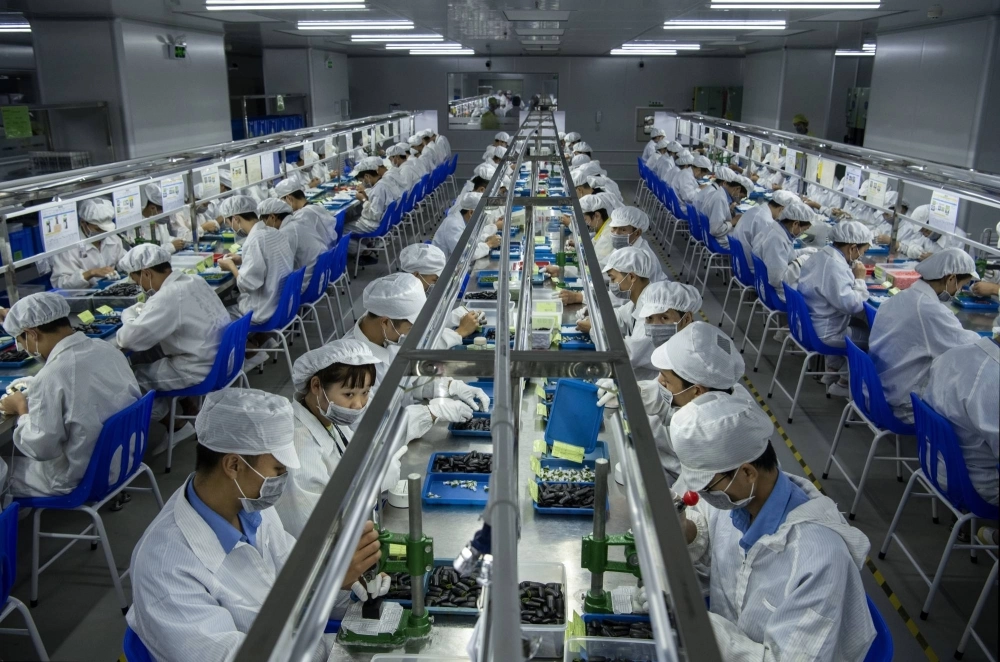
China is incredibly impressive. They get things done at a speed that is mind-blowing. The work ethic there is insane. If the West doesn’t wake up, China will dominate in AI, manufacturing, everything. Taiwan is the single biggest risk to Tesla and to the world economy.
Mars & Multi-Planetary Civilization

The thing that matters long term is being a multi-planet species. We are like a candle of light in a vast sea of darkness. As far as we know, we are the only conscious life forms in the universe. If we stay on Earth forever, eventually there will be some extinction event. Earth will get hit by an asteroid again, the size of the one that killed the dinosaurs, or a super-volcano will erupt, or we’ll destroy ourselves with nukes or AI or bio-weapons. One way or another, if we stay on one planet, game over. It’s just a question of when. There’s no escaping that. The probable lifespan of consciousness will be greatly increased by becoming multi-planetary. That’s why Elon Musk started SpaceX, to make life multi-planetary and extend the light of consciousness (the scope and scale of consciousness).
To learn more about theories on why we seem to be alone in the universe, check out
What is the Fermi Paradox? + The Great Filter + Dark Forest Hypothesis
Consciousness, Simulation Hypothesis & The Nature of Reality
There’s a one-in-billions chance we’re in base reality. Forty years ago we had Pong, now we have photo-realistic games with millions playing simultaneously. In another 10,000 years the games will be indistinguishable from reality. Either we’re in a simulation or civilization ends before that.
To learn more about the Simulation Argument check out
Are We Living in a Computer Simulation?
Memes & Humor

Memes are the ultimate form of communication. If you get the meme right, you can change the world in a day.
Bitcoin / Dogecoin / Crypto

Elon is a supporter of Bitcoin. I think Bitcoin is really on the verge of getting broad acceptance by conventional finance people. Energy is the true currency. This is why he said Bitcoin is based on energy. You can’t just pass a law and suddenly have a lot of energy. It’s very difficult to generate energy. Bitcoin is a good thing.
On Dogecoin
I sort of have a soft spot for Dogecoin because I just like dogs and memes. Occasionally I make jokes about Dogecoin, but they are really meant to be jokes. Dogecoin was made as a joke to make fun of crypto, but fate loves irony. The most entertaining outcome and the most ironic outcome would be that Dogecoin becomes the currency of Earth in the future. I think the flat inflation of Dogecoin, which means decreasing percentage inflation, is a feature, not a bug. Doge appears to be inflationary, but is not meaningfully so. Whereas, Bitcoin is arguably deflationary to a fault.
On Crypto Broadly
I do think there’s some merit in Bitcoin and maybe some of the other crypto. If dollar inflation is solved, the price in dollars to buy cryptocurrency will actually drop, other things being equal. What matters is the ratio of dollars to cryptocurrency. I’m not going to be promoting crypto. At most, in a joking way.
📚 Sources and References
Podcasts
- 2025 Nov 30: Elon Musk: A Different Conversation w/ Nikhil Kamath (WTF Podcast) episode 16
- 2025 Oct 31: Joe Rogan Experience #2404 – Elon Musk
- 2025 Sep 10: All-In Podcast (E179: DOGE, Optimus, Starlink, xAI)
- 2025 May 20: Qatar Economic Forum – Elon Musk
- 2025 Mar 17: Verdict with Ted Cruz (White House Exclusive, Elon Musk on DOGE, AI, Trump, Mars, threats to his life, and attacks on his companies).
- 2025 Feb 28: Joe Rogan Experience #2281 – Elon Musk (Trump advisory role, Tesla/SpaceX updates, Neuralink, and global challenges)
- 2025 Jan 3: Sean Hannity (Fox News Exclusive) – Trump, Musk reveal what they think of media’s attempts to divide them
- 2024 Nov 4: Joe Rogan Experience #2223 – Elon Musk (Tesla, SpaceX, xAI, elections, and personal insights pre-US election).
- 2024 Sep 9: All-In Summit 2024 (Elon Musk keynote on free speech, government efficiency, SpaceX regulations, AI, and Boeing culture).
- 2024 Aug 2: Lex Fridman Podcast #438 Elon Musk: Neuralink and the Future of Humanity
- 2024 Jun 27: Joe Rogan Experience #2054 – Elon Musk (politics pre-election amid 2024 campaign, Tesla FSD, SpaceX, and Neuralink).
- 2024 Jun 22: Everyday Astronaut (Elon Musk Starship factory tour, tours Starbase, discusses Starship Flight 4, Mars goals, and SpaceX innovations).
- 2023 Nov 29: New York Times DealBook Summit (Elon Musk w/ Andrew Ross Sorkin on Advertisers, Trust and the “Wild Storm” in His Mind).
- 2023 Nov 9: Lex Fridman Podcast #400 – Elon Musk (War, AI, Aliens, Politics, Physics, Video Games, and Humanity).
- 2023 Sep 13: All-In Summit 2023 (Elon Musk on Starlink in Ukraine, X, AI, creator economy, China, and self-driving)
- 2023 Apr 12: BBC News Interview (Elon Musk on painful Twitter/X transition, layoffs, misinformation, and work habits.
- 2021 Dec 28: Lex Fridman Podcast #252 – Elon Musk (SpaceX, Mars, Tesla Autopilot, Self-Driving, Robotics, and AI).
- 2021 Feb 11: Joe Rogan Experience #1609 – Elon Musk
- 2020 May 7: Joe Rogan Experience #1470 – Elon Musk
- 2018 Sep 7: Joe Rogan Experience #1169 – Elon Musk
- 2017 May 3: TED | Elon Musk: The future we’re building — and boring
- 2015 Sep 8: Vanity Fair New Establishment – Elon Musk (Tesla and SpaceX).
- 2022 Apr 18: TED – Elon Musk: A future worth getting excited about | Tesla Texas Gigafactory interview
Books
- Elon Musk by Walter Isaacson (2023)
- Elon Musk: Tesla, SpaceX, and the Quest for a Fantastic Future by Ashlee Vance (2017)