Science
Scientific content
-

What is the Prisoner’s Dilemma?
Learn More →: What is the Prisoner’s Dilemma?The Prisoner’s Dilemma, introduced by Albert W. Tucker in 1950, illustrates the conflict between individual rationality and collective cooperation. It depicts two individuals faced with choices that affect their outcomes, emphasizing strategic decision-making across various fields and real-world implications.
-
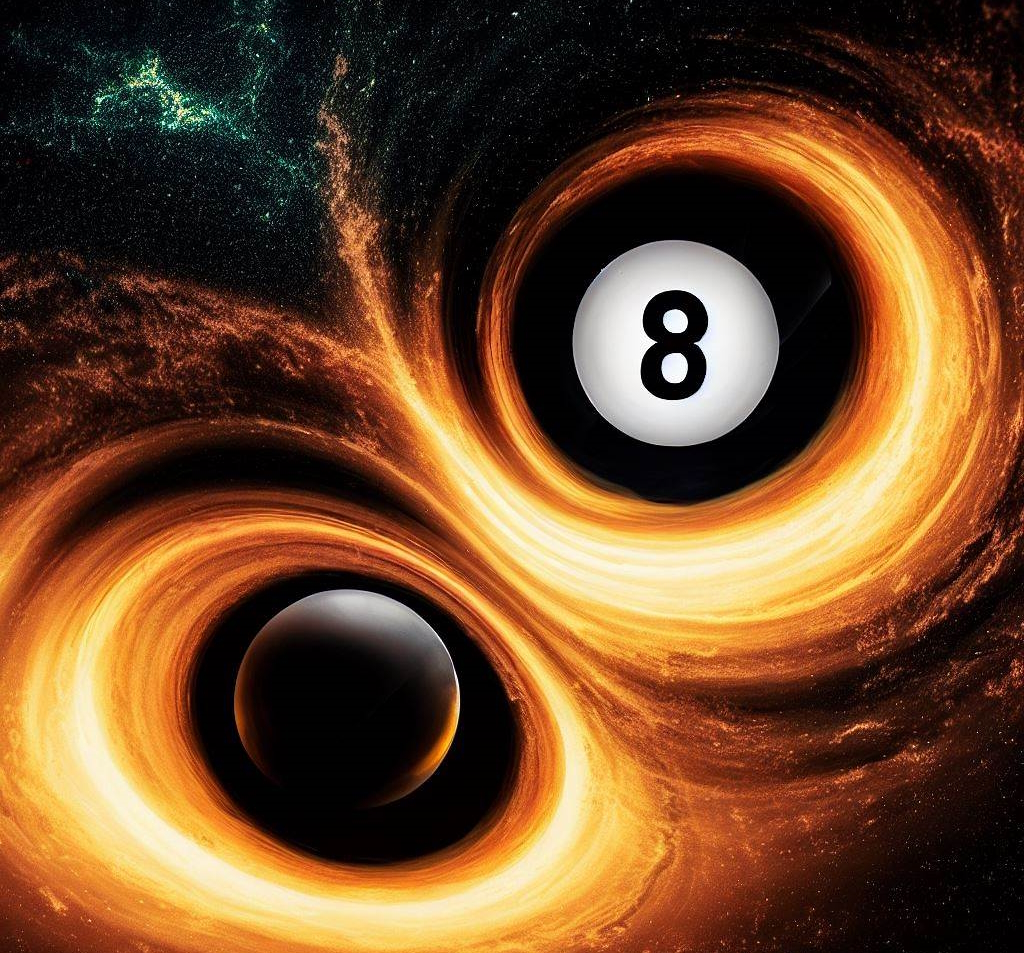
What is the Wormhole Billiard Ball Paradox?
Learn More →: What is the Wormhole Billiard Ball Paradox?The Wormhole Billiard Ball Paradox is a description of a thought experiment involving two hypothetical wormholes connected by a tunnel. A billiard ball is fired into one of the wormholes, and emerges from the other before it was fired into the first, leading to a potential violation of causality. Read on to learn more.
-

What are Kepler’s Laws of Planetary Motion?
Learn More →: What are Kepler’s Laws of Planetary Motion?Kepler’s Laws of Planetary Motion refers to a set of three laws that describe the motion of planets around the sun. These laws have been critical in understanding the behavior of planets and other celestial bodies in our solar system and beyond. Read on to learn more.
-

What is Peto’s Paradox?
Learn More →: What is Peto’s Paradox?“Peto’s Paradox” refers to the fact that larger animals, including humans, have more cells and a higher risk of developing cancer, yet they do not have a proportionally higher incidence of cancer than smaller animals with fewer cells. Read on to learn more.
-

What is the Twin Paradox?
Learn More →: What is the Twin Paradox?The Twin Paradox is a fascinating thought experiment in special relativity that demonstrates the concept of time dilation and how time can appear to pass differently for different observers depending on their relative motion. Read on to learn more.
-
What is the Fermi Paradox?
Learn More →: What is the Fermi Paradox?The Fermi Paradox is a paradoxical observation about the apparent contradiction between the high probability of the existence of extraterrestrial civilizations and the lack of evidence for, or contact with, such civilizations. Read on to learn more.
-

What is the Goldilocks Rule?
Learn More →: What is the Goldilocks Rule?The Goldilocks Rule is a principle that emphasizes the importance of finding a balance or a “sweet spot” within a certain range to achieve optimal functionality. Whether in astronomy, biology, engineering, or other fields this principle is vital to ensuring that systems are effective and efficient.
-

What People are Missing in the Evolution of Search and the Way Forwards
Learn More →: What People are Missing in the Evolution of Search and the Way ForwardsGoogle’s position is being challenged, but what is the impact and possible countermeasures? We take a look at brief history of search, Google’s use of AI and current situation. Consider the cost of search and its future, counter measures and potential changes in monetization models.
-

A Vital Step Closer to Healthspan Extension and Age Reversal
Learn More →: A Vital Step Closer to Healthspan Extension and Age ReversalThe paper “Loss of epigenetic information as a cause of mammalian aging” published in Cell, is very compelling and deserves more attention. It focused on identifying what may be the the core driver of aging and a demonstration of an ability to reverse certain aspects of aging. Read on for the key aspects.